The world needs more electricity. Solar is the answer
There is a pretty simple story happening in energy right now.
The world is going to need a lot more electricity.
Cars are becoming electric. Heating is becoming electric. Industry is becoming more electric. And then there is AI, which is creating a completely new wave of demand from data centres.
At the same time, we are trying to build an energy system that is cheaper, more secure and produces fewer emissions.
That means we need to build a huge amount of new electricity generation.
And we think solar is going to be a big part of it.
Electricity demand is accelerating
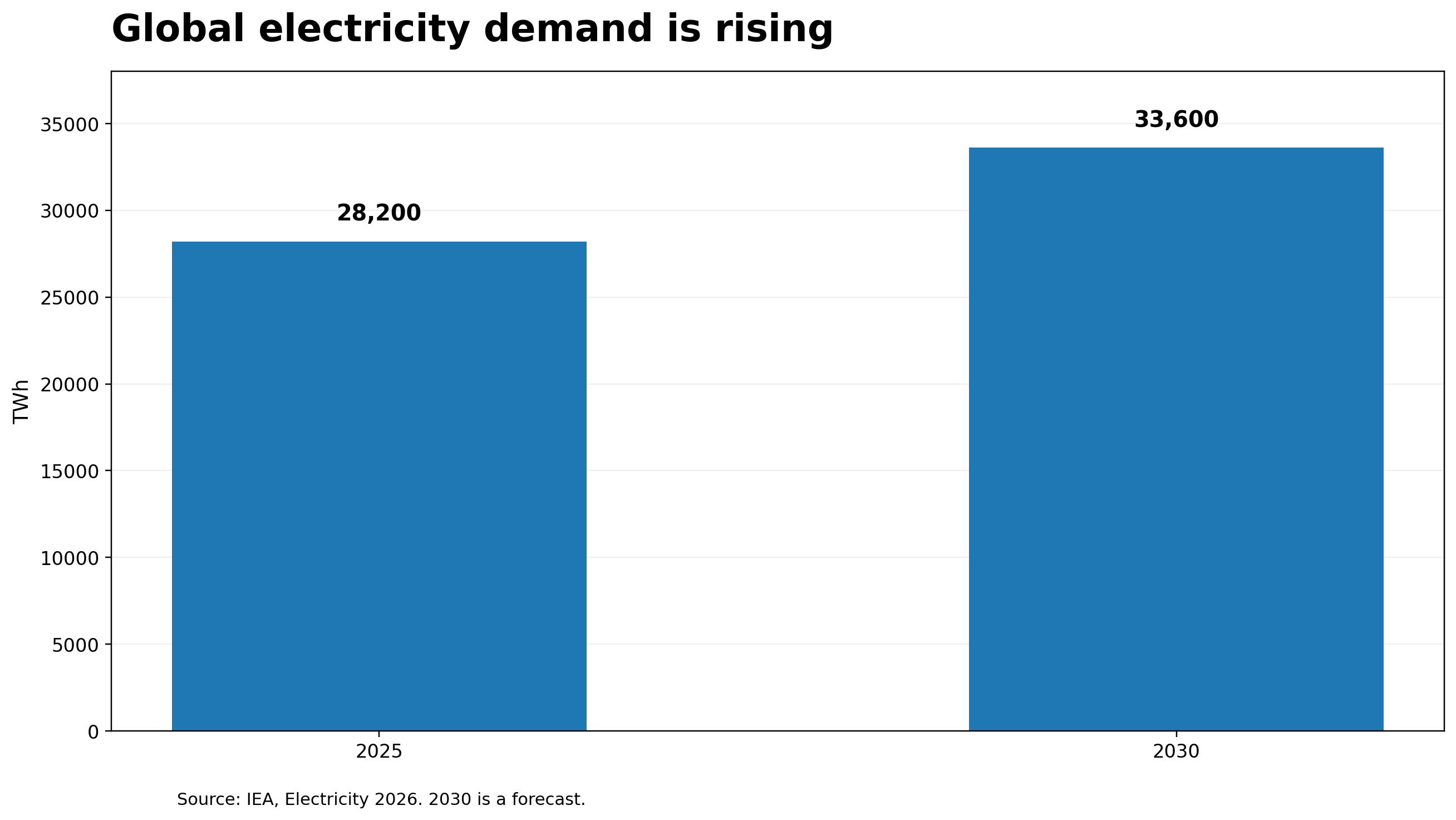
Global electricity demand grew by 3% in 2025.
The International Energy Agency expects it to grow by an average of 3.6% every year between 2026 and 2030.
That means the world could go from around 28,200 TWh of electricity consumption in 2025 to 33,600 TWh in 2030.
That is an additional 5,400 TWh in just five years.
This growth is coming from many different places:
Electric vehicles
Air conditioning
Heat pumps
Factories
Data centres
AI
The wider electrification of our economy
The direction is clear.
We are going to need more electricity.
A lot more.
AI is making the electricity problem even bigger
One of the easiest ways to see what is happening is to look at data centres.
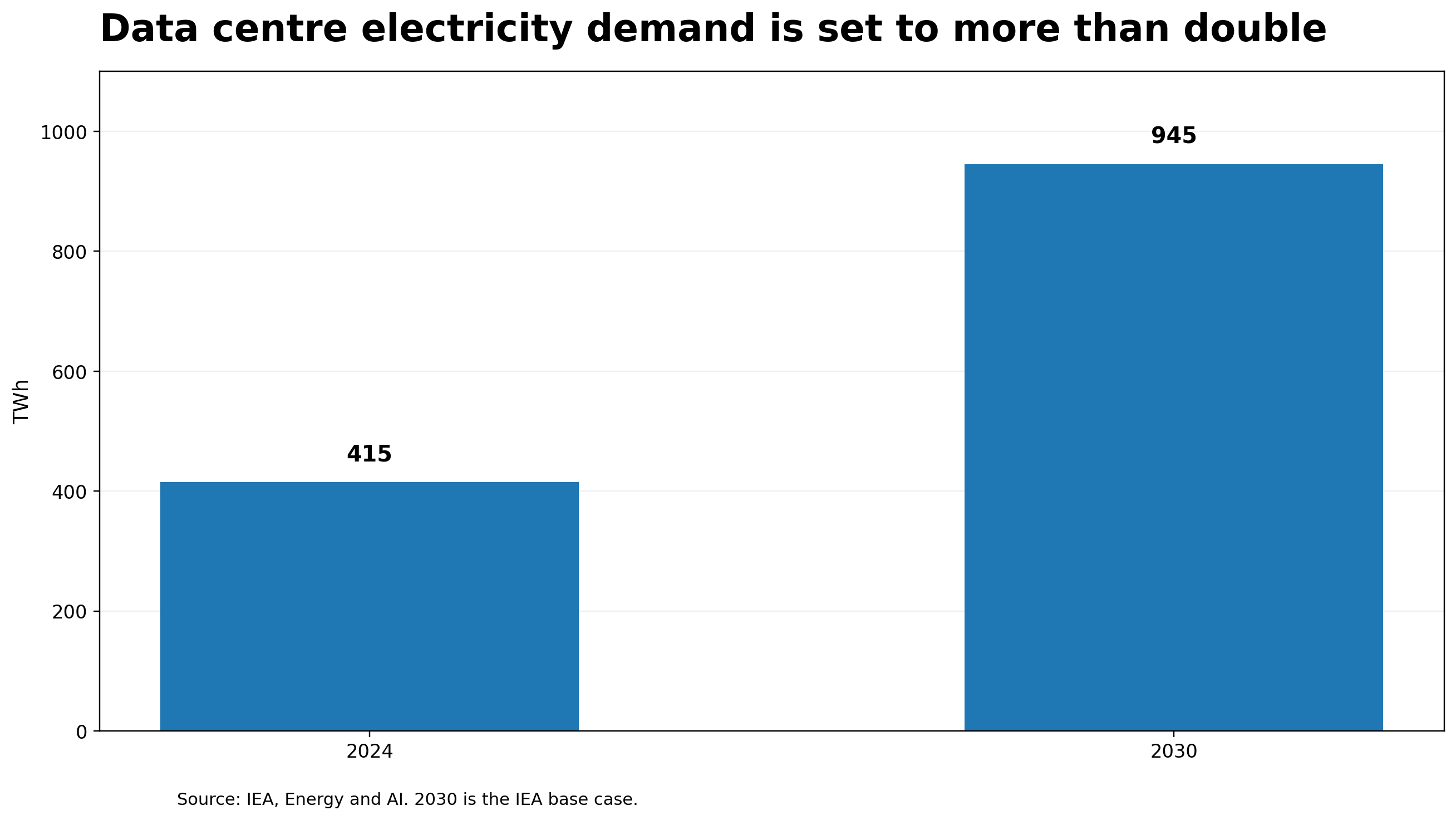
In 2024, data centres consumed around 415 TWh of electricity globally.
The IEA expects this to more than double to around 945 TWh by 2030.
AI is one of the main reasons.
That is a huge increase for one sector in only six years.
But data centres are only one part of the story. The bigger trend is that electricity is becoming more important everywhere.
So we need to build more of it.
Solar is already scaling
The interesting part is that we are not starting from zero.
Solar is already growing at an incredible rate.
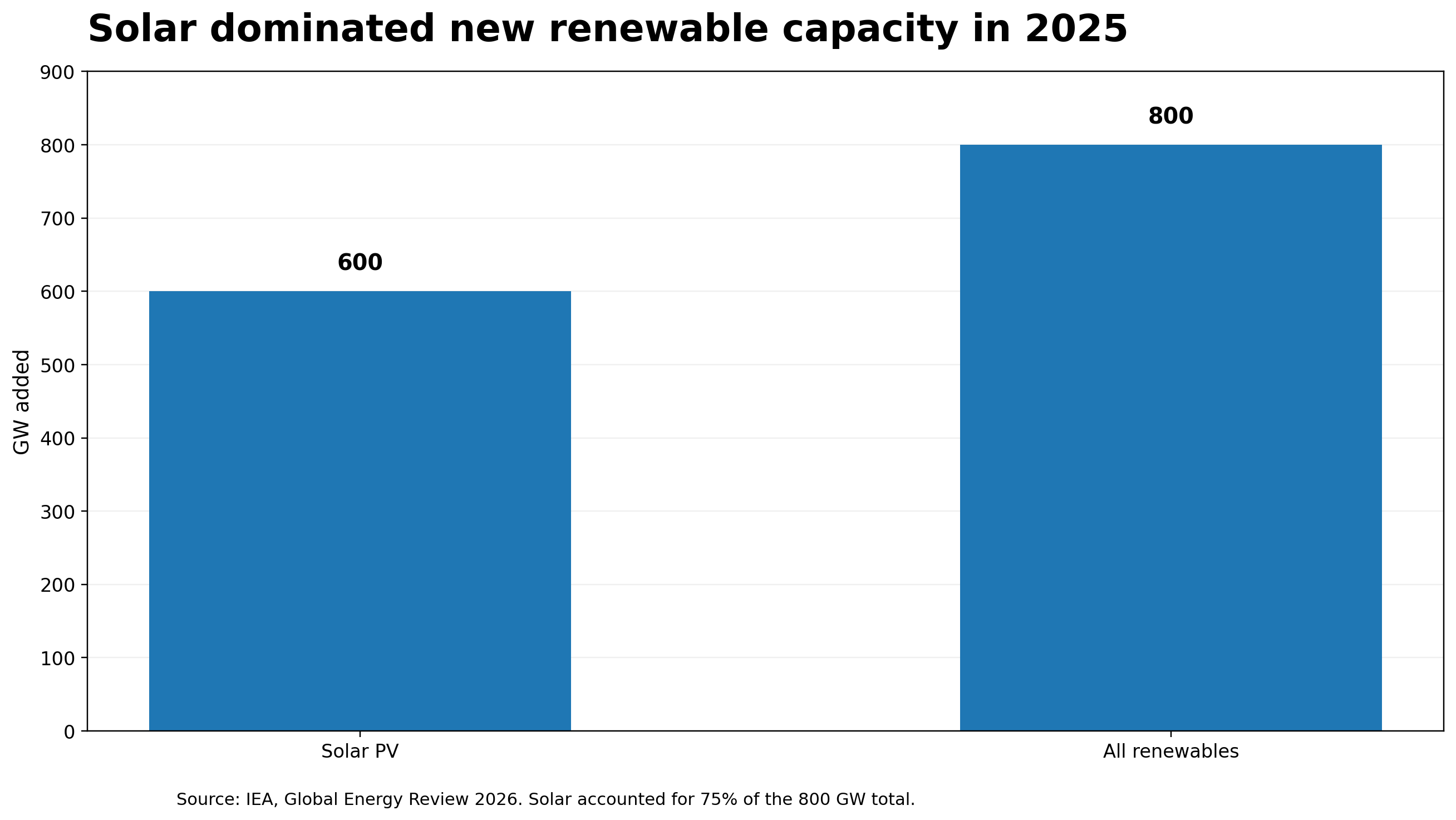
In 2025, the world added around 800 GW of renewable power capacity.
Solar PV represented around three quarters of that new capacity.
The growth is expected to continue.
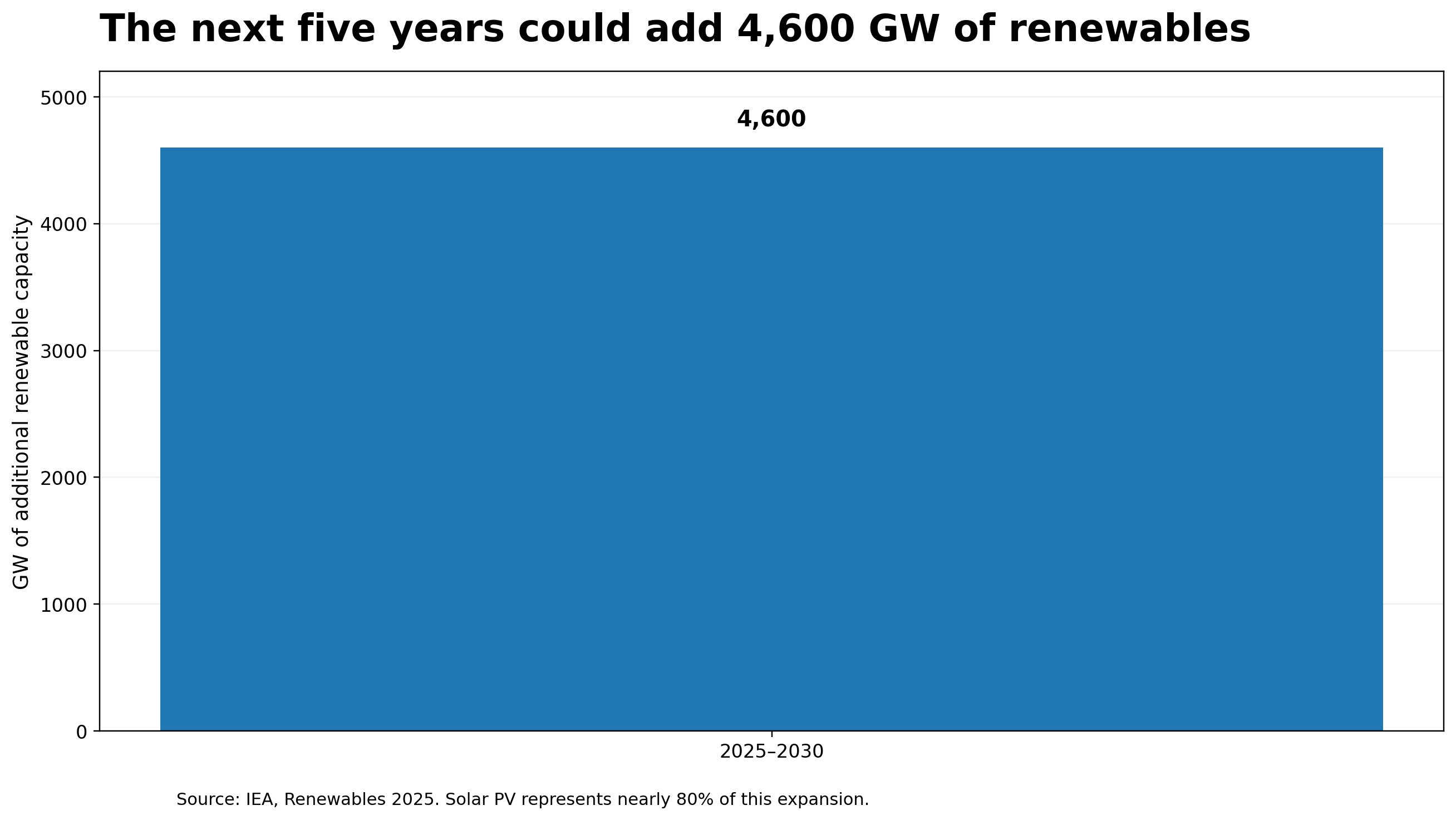
The IEA expects almost 4,600 GW of new renewable power capacity to be added between 2025 and 2030.
Solar PV is expected to represent nearly 80% of that expansion.
This is where things get interesting.
If we are really going to build this much solar, we cannot think about solar in the same way we did 10 or 20 years ago.
Solar cannot just stay on the roof
For a long time, solar was basically synonymous with one thing:
Put panels on the roof.
And there is still a huge amount of potential there. But the world has a lot more surfaces than roofs.
We have:
Roads
Parking lots
Fences
Factories
Warehouses
Vehicles
Trains
Noise barriers
Building façades
Agricultural infrastructure
Temporary structures
And many other places that currently have nothing to do with electricity generation.
Why shouldn't some of these surfaces produce power?
This is the shift we think we will see over the next decade.
Solar will increasingly become something that is integrated into infrastructure, rather than something that is simply installed on top of it.
A fence can become a solar fence.
A truck can become a mobile energy asset.
A car park can become a power plant.
A building façade can generate electricity.
A logistics site can combine its roof, parking areas, vehicles and surrounding infrastructure into one energy system.
The technology is already moving in this direction.
And as electricity becomes more valuable, the incentive to use every available surface will become stronger.
We are going to need more solar in more places
There is another reason this matters.
Building electricity generation is not just about how much capacity we can manufacture.
It is also about where we can put it.
Grids are already struggling to connect new projects in many parts of the world.
The IEA estimates that more than 2,500 GW of renewable, storage and large-load projects are currently stuck in grid connection queues.
That changes the question.
Instead of always asking:
“Where can we build another giant solar farm?”
We should also ask:
“Where can we generate electricity where people and businesses already need it?”
That means:
Putting more generation closer to demand
Using infrastructure that already exists
Making solar more flexible in terms of where and how it can be installed
We think this will become one of the defining opportunities for the next generation of solar.
And then there is space
This is where the story gets a little more interesting.
Solar does not necessarily have to stay on Earth.
Space-based solar power is still experimental. It is nowhere near being a mainstream source of electricity today.
But the concept is real.
The basic idea is to put very large solar installations in orbit, collect sunlight and transmit the electricity back to Earth using wireless power transmission.
The advantage is obvious.
A solar installation in space does not have to deal with clouds, night or the atmosphere in the same way as a solar installation on Earth.
ESA has been actively researching the idea through its SOLARIS programme. Its studies have looked at whether space-based solar power could eventually provide continuous electricity to Europe.
There are still some very big problems to solve:
The structures would be enormous
The amount of power that would need to be transmitted is enormous
The economics are still uncertain
Building and maintaining infrastructure at that scale in orbit is extremely difficult
So this is not something we should expect to see powering our homes next year.
But it is worth paying attention to.
Because it shows how far the idea of solar could eventually go.
From rooftops...
to vehicles...
to infrastructure...
to orbit.
The bigger opportunity
We think the interesting part of this story is not simply that solar is growing.
We already know that.
The interesting part is where solar goes next.
The first phase of the solar industry was largely about making panels cheaper and installing more of them.
The next phase is about finding places where solar has not traditionally been used.
And that means combining solar with the things we already have:
Buildings
Transport
Cities
Industry
Agriculture
Infrastructure
Eventually, perhaps, space
This is why we think the future of solar is much bigger than the traditional solar industry.
It is not just about solar farms.
It is about turning more of the physical world into part of the energy system.
Solar everywhere
We are entering a period where electricity is going to become even more important to almost every part of the economy.
At the same time, solar is becoming one of the fastest ways to add new generation.
The combination is pretty powerful.
We will need more electricity.
We will need to generate it in more places.
And solar is increasingly flexible enough to do that.
So the question we find more interesting is no longer:
“How many solar panels can we install?”
It is:
“Where else can we put solar?”
That is the future we are interested in at ALL IN SOLAR.
Solar power. Everywhere. For everyone.